Lysozyme Protein in Food Preservation: Dosage, pH, Temperature, and QC
Troubleshoot lysozyme protein use in food preservation: dosage, pH, temperature, QC checks, COA/TDS/SDS, and supplier qualification.
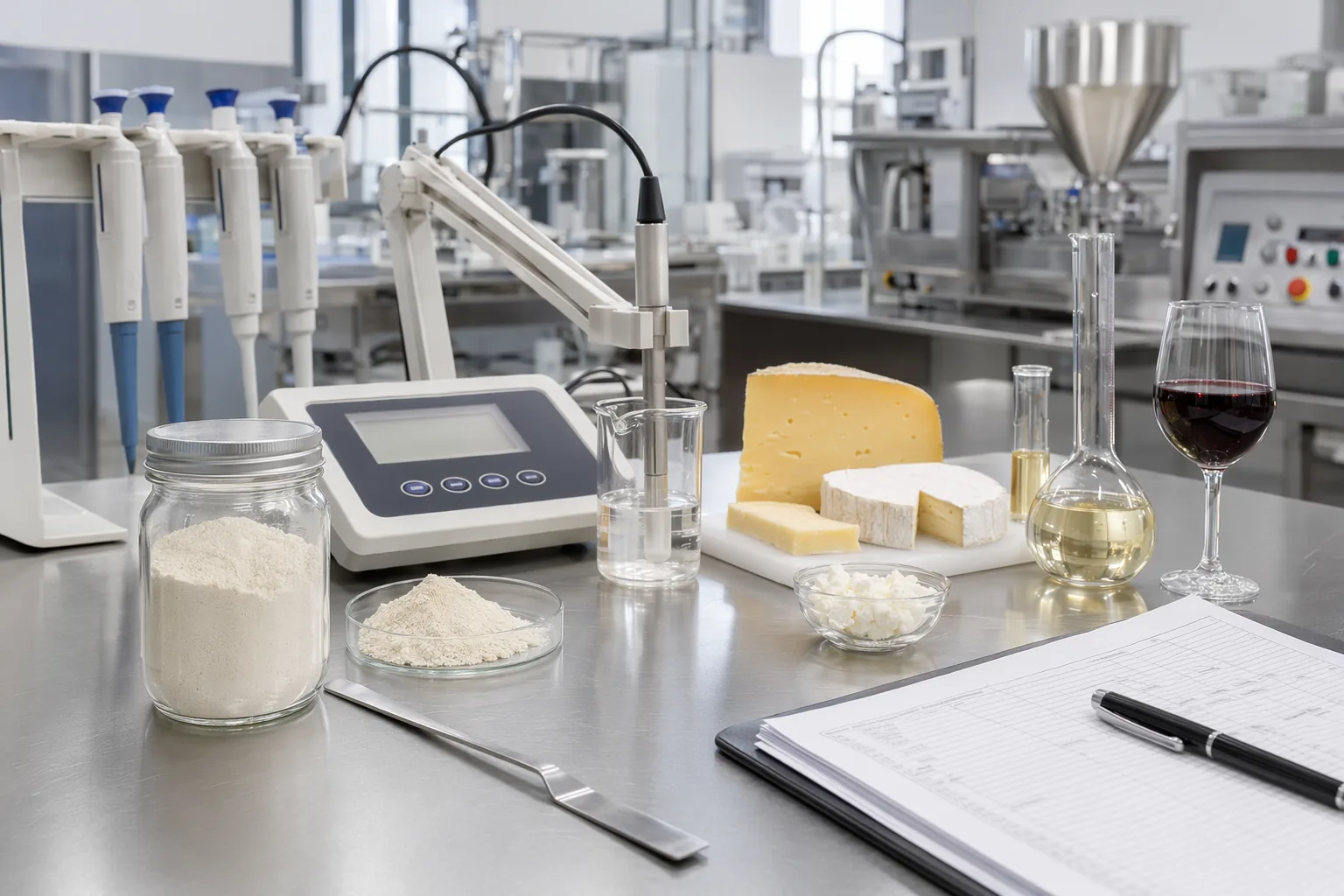
A practical B2B guide for food manufacturers evaluating lysozyme protein for microbial control, process troubleshooting, and cost-in-use optimization.
What Is Lysozyme Protein in Industrial Food Preservation?
Lysozyme protein is an enzyme used in selected food and beverage processes to help manage susceptible Gram-positive bacteria. In B2B purchasing, the key question is not simply what is lysozyme, but whether a defined lysozyme enzyme grade delivers reliable activity in your matrix, process, and regulatory market. Commercial material is often egg white lysozyme, also called lysozyme d'oeuf in some sourcing documents. Buyers may also encounter terms such as protein lysozyme, lysozyme chloride, or lysozyme hydrochloride; these should be clarified on the TDS and COA because form, activity units, excipients, and moisture can affect dosing. Lysozyme function depends on access to bacterial cell wall peptidoglycan, so performance can vary with fat, protein, salt, polyphenols, pH, and heat history. It is a processing aid or preservative tool, not a substitute for hygiene, validated thermal steps, or finished-product microbiological controls.
Primary relevance: inhibition of susceptible Gram-positive bacteria • Common source: egg white lysozyme for food applications • Not a broad-spectrum antimicrobial for all spoilage risks • Requires matrix-specific validation before scale-up
Dosage Bands: Start with Activity, Not Only Weight
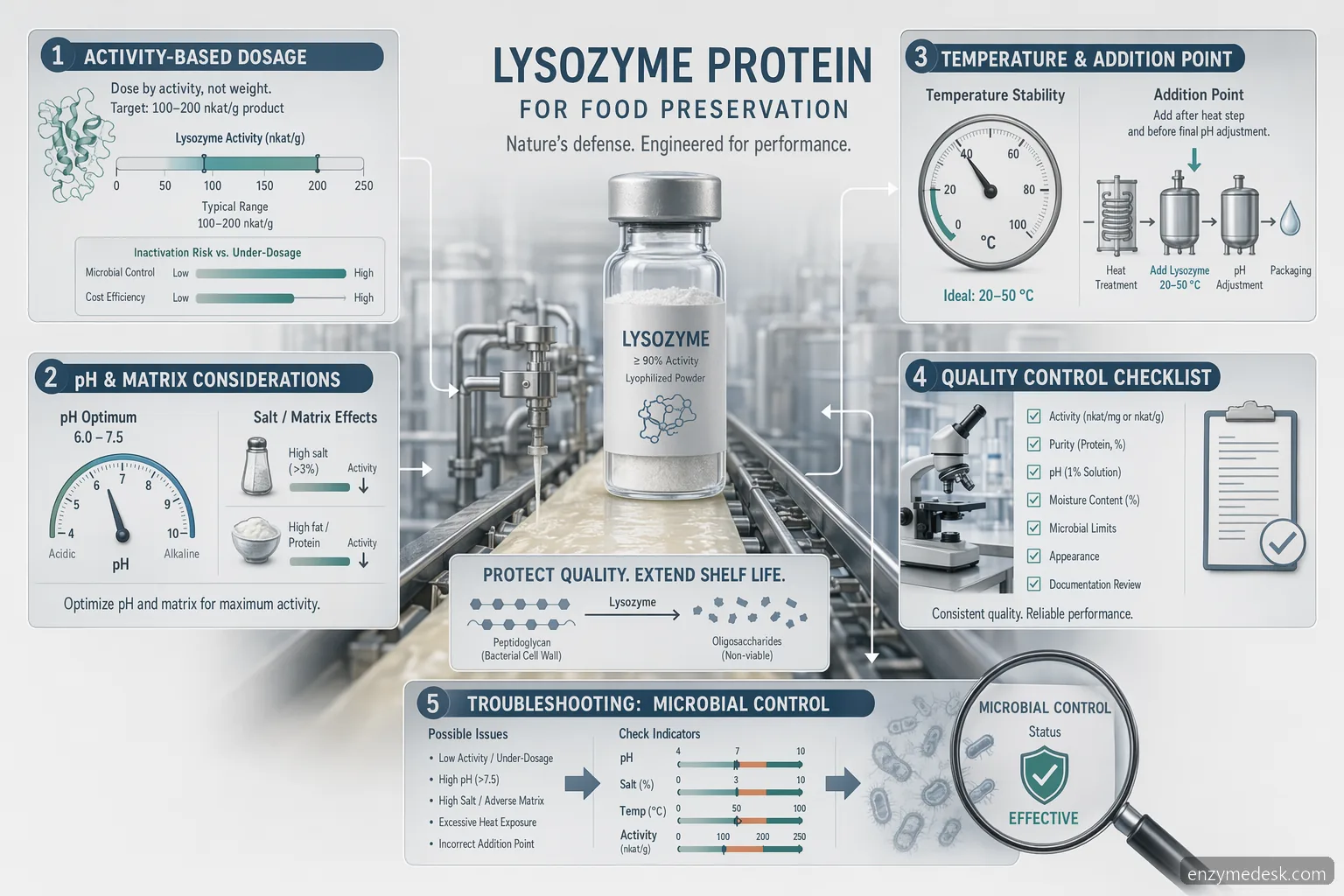
Troubleshooting lysozyme dosage starts with activity units and target organism data, not a generic weight addition. A phrase such as lysozyme 90mg may appear in retail or laboratory contexts, but industrial food preservation should be specified as activity per kilogram or liter of product, with the supplier’s assay method identified. For cheese, wine, and other preserved foods, trial designs often screen low, medium, and high dose bands against a positive control and untreated control. The right dosage depends on initial bioburden, process lethality, pH, salt, water activity, contact time, and whether the enzyme is added before or after a heat step. Overdosing can raise cost-in-use and may affect declaration, allergen management, or sensory profile. Underdosing can create a false sense of security. Confirm that pilot batches match plant mixing energy, addition sequence, and hold times.
Define dosage by enzyme activity and product weight or volume • Run at least three dose levels during pilot validation • Confirm dispersion before sampling for microbiology • Track cost-in-use per finished unit, not only price per kilogram
pH, Salt, and Matrix Effects That Change Performance
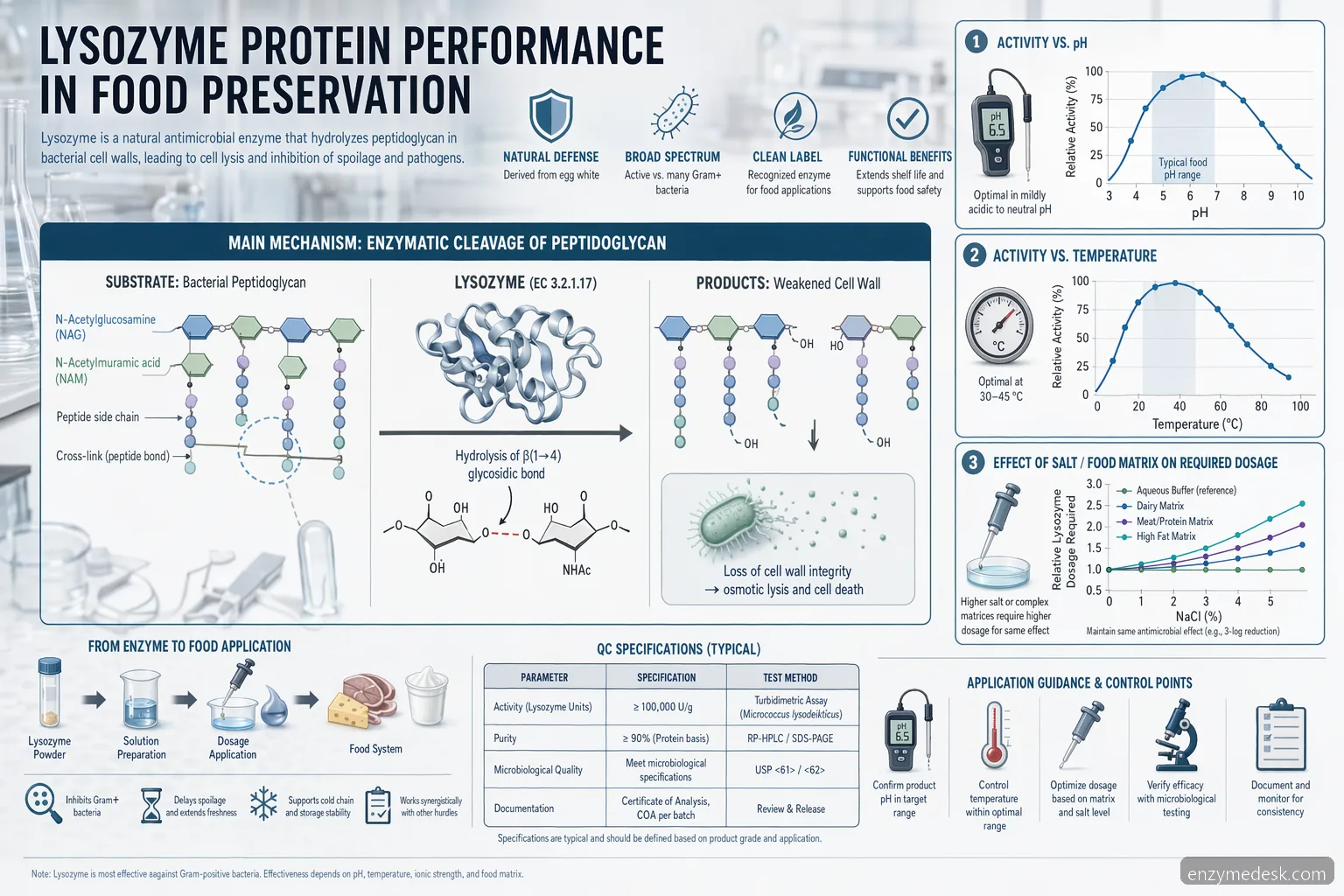
Lysozyme function is strongly influenced by pH and the surrounding food matrix. Many lysozyme enzyme preparations show useful activity in mildly acidic to near-neutral systems, but the practical range should be confirmed from the supplier TDS and by in-house testing. Wine, cheese brine, dairy systems, and prepared foods can differ sharply because ionic strength, polyphenols, protein binding, and fat distribution can reduce access to microbial cell walls. When troubleshooting a weak result, compare the pH at the time of addition with the pH at final packaging, then evaluate whether salt, phosphate, stabilizers, or suspended solids are interfering. A bench test in buffer is not enough. Use the real formulation, real water quality, and representative process order. If the target food is highly acidic, high-fat, or heavily heat-treated, request technical support data specific to similar systems before committing to production volumes.
Record pH at dosing, holding, and final product stages • Test in the complete food matrix, not only in buffer • Review interactions with salt, proteins, fat, and polyphenols • Confirm supplier guidance for the intended application
Temperature and Addition Point: Protect Enzyme Activity
Temperature management is one of the most common lysozyme troubleshooting points. Like other proteins, lysozyme can lose activity when exposed to excessive heat, long hot holds, or aggressive processing conditions. Some formulations tolerate moderate processing temperatures for short periods, but buyers should not assume survival through pasteurization, cooking, spray drying, or hot filling without supplier data and plant validation. In many preservation workflows, the best addition point is after a major heat step, during a controlled cooling or blending stage where mixing is adequate and microbial recontamination is controlled. Evaluate the enzyme’s exposure temperature, time, shear, and cleaning chemical carryover. If lysozyme is added to a warm tank, map actual tank temperatures rather than relying on a single setpoint. Confirm residual activity or performance by microbiological challenge testing, not by assumption.
Avoid unnecessary exposure to high heat or extended hot holding • Consider post-thermal addition where the process allows • Map actual tank temperature and residence time • Validate with target-organism challenge or shelf-life testing
Quality Documentation and Supplier Qualification
For industrial buyers, supplier qualification is as important as enzyme performance. Request a current COA for each lot, a technical data sheet, SDS, allergen statement, country of origin, recommended storage conditions, activity assay description, and microbiological specification. Because egg white lysozyme is egg-derived, allergen status and labeling implications must be reviewed by regulatory and QA teams for each market. If the supplier describes lysozyme chloride or another salt form, confirm whether the specification is equivalent to your approved material. Compare vendors on activity consistency, lead time, packaging integrity, technical support, traceability, and change-notification process. A lower unit price may not reduce cost-in-use if activity is lower, dosage is higher, or failures increase hold-and-test inventory. Before approval, run pilot validation, sensory checks where relevant, and shelf-life or challenge studies using production-like conditions.
Require COA, TDS, SDS, allergen, origin, and storage data • Confirm activity method and acceptance limits • Assess traceability and change-notification practices • Calculate cost-in-use based on validated dosage
Troubleshooting Checklist for Weak Lysozyme Results
If lysozyme protein is not delivering the expected preservation effect, investigate the full process before changing supplier or increasing dosage. First, confirm that the target organism is lysozyme-susceptible and that initial contamination is within the intended control range. Next, check whether the enzyme was stored correctly, dispersed fully, and added at the validated process step. Review pH, temperature exposure, salt level, and competing matrix components. Compare the actual lot COA activity with the trial lot used during development. Revisit sampling points: a poor mixing pattern can make one sample look compliant and another fail. For beverages such as wine or for cheese applications, confirm that the target microorganisms and sensory constraints match the original validation. Escalate only after documenting deviations, running a controlled repeat, and calculating whether a revised dose is commercially justified.
Verify organism susceptibility and baseline microbial load • Check storage, hydration, dispersion, and addition sequence • Compare plant conditions with pilot validation records • Review COA activity and lot-to-lot variation • Use controlled repeat trials before changing specification
Technical Buying Checklist
Buyer Questions
Lysozyme is used to help control susceptible Gram-positive bacteria in selected food and beverage systems. In industrial settings, it is evaluated as part of a validated preservation program that may also include hygiene, heat treatment, pH control, salt, packaging, and cold chain. Its performance must be confirmed in the actual formulation because matrix effects can change enzyme access and antimicrobial impact.
Many commercial food grades are egg white lysozyme, sometimes listed as lysozyme d'oeuf in supplier documents. However, buyers should not assume equivalence across products. Confirm the enzyme source, activity units, salt form, purity, allergen declaration, and intended food-grade status on the COA and TDS before approving a material for production trials or commercial purchasing.
Start with supplier application guidance, then run pilot trials using activity-based dosage levels in the real food matrix. Test at least three dose bands against untreated and process-control samples. Measure target organisms, total counts where relevant, pH, sensory impact, and shelf-life performance. The approved dosage should balance microbial control, declaration needs, allergen review, and cost-in-use.
Lysozyme is a protein enzyme, so heat exposure can reduce activity depending on temperature, time, pH, moisture, and formulation. Do not assume it will survive pasteurization, cooking, hot filling, or drying without data. If the process includes heat, evaluate post-heat addition where possible or validate residual performance through microbiological testing under production-like conditions.
Common causes include different pH, higher bioburden, incomplete mixing, heat exposure, salt or protein interference, different addition point, or a lot with different activity. Lab buffer tests can overstate performance compared with real foods. Compare plant records with pilot conditions, verify COA activity, repeat the test under controlled conditions, and confirm target-organism susceptibility.
No. Search results for lysozyme mouthwash UK or supplement-style lysozyme 90mg products are not suitable for industrial food preservation decisions. Food manufacturers should rely on food-grade technical documentation, supplier application data, regulatory review, and pilot validation in the intended product. Purchasing criteria should focus on activity, quality systems, allergen status, traceability, and cost-in-use.
Lysozyme for Research & Industry
Need Lysozyme for your lab or production process?
ISO 9001 certified · Food-grade & research-grade · Ships to 80+ countries
Frequently Asked Questions
What is lysozyme used for in food preservation?
Lysozyme is used to help control susceptible Gram-positive bacteria in selected food and beverage systems. In industrial settings, it is evaluated as part of a validated preservation program that may also include hygiene, heat treatment, pH control, salt, packaging, and cold chain. Its performance must be confirmed in the actual formulation because matrix effects can change enzyme access and antimicrobial impact.
Is lysozyme protein the same as egg white lysozyme?
Many commercial food grades are egg white lysozyme, sometimes listed as lysozyme d'oeuf in supplier documents. However, buyers should not assume equivalence across products. Confirm the enzyme source, activity units, salt form, purity, allergen declaration, and intended food-grade status on the COA and TDS before approving a material for production trials or commercial purchasing.
How should we choose a lysozyme dosage for a new product?
Start with supplier application guidance, then run pilot trials using activity-based dosage levels in the real food matrix. Test at least three dose bands against untreated and process-control samples. Measure target organisms, total counts where relevant, pH, sensory impact, and shelf-life performance. The approved dosage should balance microbial control, declaration needs, allergen review, and cost-in-use.
Can lysozyme survive heat processing?
Lysozyme is a protein enzyme, so heat exposure can reduce activity depending on temperature, time, pH, moisture, and formulation. Do not assume it will survive pasteurization, cooking, hot filling, or drying without data. If the process includes heat, evaluate post-heat addition where possible or validate residual performance through microbiological testing under production-like conditions.
Why did lysozyme work in the lab but fail in production?
Common causes include different pH, higher bioburden, incomplete mixing, heat exposure, salt or protein interference, different addition point, or a lot with different activity. Lab buffer tests can overstate performance compared with real foods. Compare plant records with pilot conditions, verify COA activity, repeat the test under controlled conditions, and confirm target-organism susceptibility.
Does lysozyme mouthwash UK information apply to food manufacturing?
No. Search results for lysozyme mouthwash UK or supplement-style lysozyme 90mg products are not suitable for industrial food preservation decisions. Food manufacturers should rely on food-grade technical documentation, supplier application data, regulatory review, and pilot validation in the intended product. Purchasing criteria should focus on activity, quality systems, allergen status, traceability, and cost-in-use.
Related: Lysozyme for antimicrobial control in food systems
Turn This Guide Into a Supplier Brief Request lysozyme COA/TDS/SDS review and pilot-scale dosage support for your food preservation process. See our application page for Lysozyme for antimicrobial control in food systems at /applications/lysozyme-definition-applications/ for specs, MOQ, and a free 50 g sample.
Contact Us to Contribute