Lysozyme Activity Assay: How to Use Lysozyme in Food Preservation Formulations
How buyers and QC teams use lysozyme activity assay data: comparing offers on one unit basis, incoming-lot checks, residual-lysozyme testing and pilot validation.
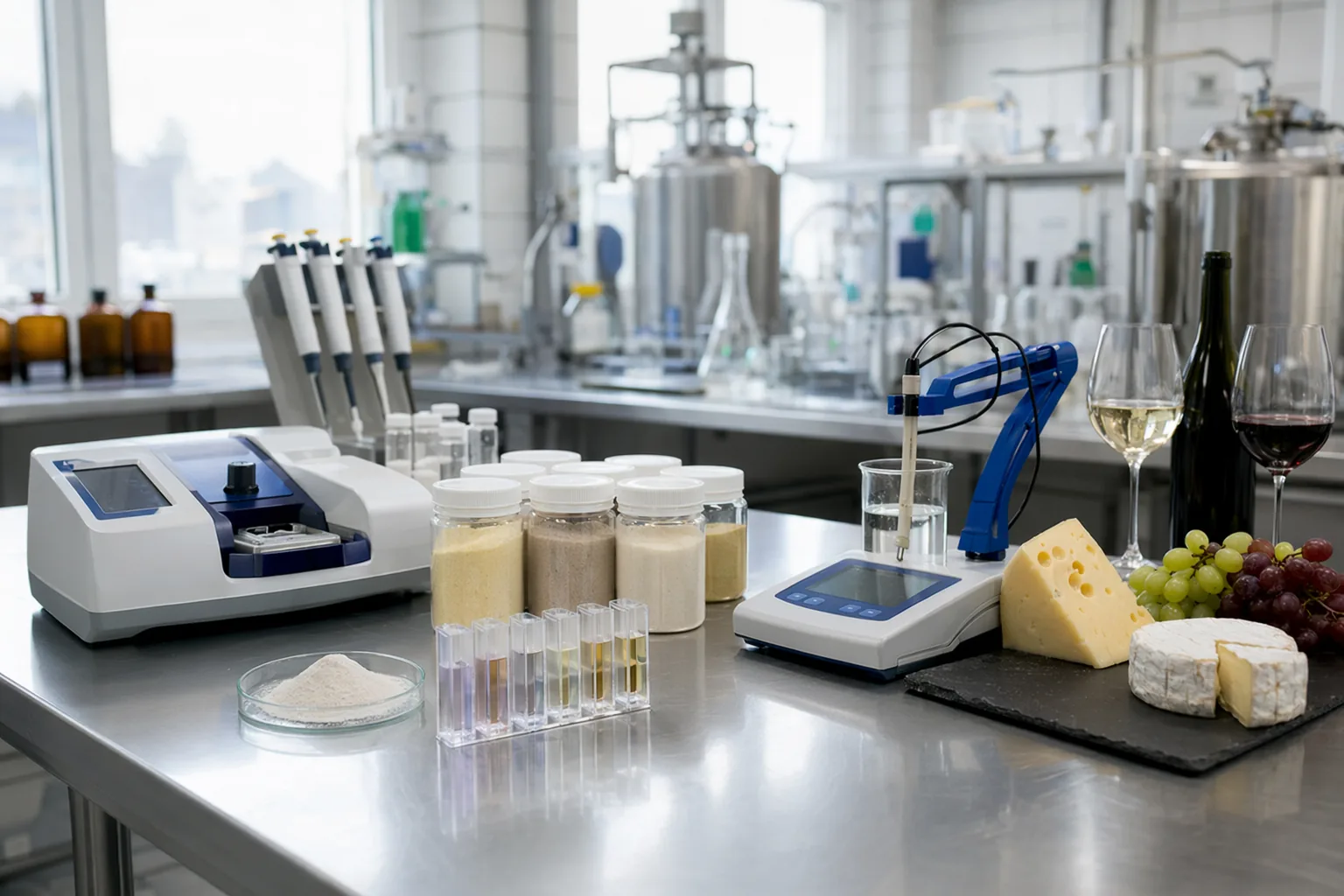
Two lysozyme offers at different prices per kilogram can cost the same per unit of activity, or very different amounts. For food manufacturers, QC teams and resellers, the lysozyme activity assay is more than a lab number: it is the basis for comparing quotes, dosing, incoming QC, and cost-in-use modeling.
What Is Lysozyme and Why Activity Matters
Lysozyme is a naturally occurring antimicrobial enzyme, commonly sourced from egg white, that hydrolyzes beta-1,4 linkages in bacterial peptidoglycan. In food preservation, the lysozyme function is mainly control of susceptible Gram-positive bacteria, including certain lactic acid bacteria and spore-formers, depending on the matrix. For an industrial buyer, “what is lysozyme” is less important than how much active enzyme is delivered into the formulation. A product may be described as protein lysozyme, lysozyme protein, egg white lysozyme, or lysozyme chloride, but performance must be compared using an activity assay with a defined method. Weight-based labels, including small retail-style references such as lysozyme 90mg, do not predict preservation performance unless the activity per gram and processing losses are known.
Prioritize activity units per gram for procurement specifications. • Confirm origin and allergen labeling requirements for egg-derived material. • Match the enzyme grade to food, wine, cheese, or pharmaceutical use.
Typical Lysozyme Activity Assay Method
A common lysozyme activity assay measures the decrease in turbidity of a Micrococcus lysodeikticus or Micrococcus luteus cell suspension in a spectrophotometer. The substrate concentration, buffer, pH, temperature, wavelength and unit definition must be stated because results are not interchangeable between methods. Activity is then expressed as units per milligram or units per gram. For incoming QC, buyers should compare each COA result against an agreed specification and periodically verify with an internal or third-party method. The assay does not replace challenge testing in the final food, but it provides a reliable potency baseline for dosing calculations, supplier comparison, and shelf-life validation.
Record substrate lot, buffer, pH, temperature, wavelength, and unit definition. • Use reference material or retained approved batch for trend comparison. • Set acceptance limits before purchase orders are issued.
Formulation Conditions for Food Preservation
Lysozyme performs best when the formulation allows contact with susceptible bacterial cell walls. The working range on a supplier's sheet (for our powder, pH 6.0–9.0 and 37°C–50°C) describes the enzyme, not your product, so measure activity and microbial results in the real matrix. High heat can reduce activity, so add the enzyme after severe thermal steps where possible, such as during cooling, blending, brining, or pre-pack fill operations, and validate any warm hold. Salt, fat, polyphenols, gums, phosphates, and high microbial load can influence performance. Screen a range of doses, then refine based on microbial results, sensory impact, and label limits.
Run matrix-specific trials rather than copying dosage from another product. • Check residual activity after heat, shear, and storage. • Validate compatibility with preservatives, acids, salts, and packaging atmosphere.
Use in Cheese, Wine, and Other Foods
In cheese, lysozyme is often evaluated to help manage late blowing caused by susceptible Clostridium species, with the dose expressed per volume of milk and scaled to the potency of the lot. In wine, lysozyme may be used to manage lactic acid bacteria and malolactic fermentation, subject to local regulatory limits and sensory validation. In prepared foods, sauces, brines, and chilled products, dosage should be based on organism target, pH, water activity, and competing hurdles. In each case the activity on the COA is what turns a trial dose into a purchase quantity, so a lot with a different activity needs a recalculated dose. Pharmaceutical or oral-care searches such as lysozyme mouthwash UK are outside food formulation scope and should not be used to infer food-grade dosage or compliance.
Confirm local regulatory status and maximum permitted use before scale-up. • Assess haze, flavor, texture, and protein interactions in wine or dairy systems. • Include untreated and benchmark controls in every pilot.
QC Checks and Supplier Qualification
A qualified lysozyme supplier should provide a current COA for each batch, plus a TDS and SDS covering composition, handling, storage, shelf life, allergen status, and recommended use conditions. For B2B purchasing, review the stated lysozyme activity assay, microbial limits, moisture, ash, protein, appearance, solubility, heavy metal specifications where applicable, and country of origin. Supplier qualification should also cover traceability, change-control notification, sample availability, lead time, packaging integrity, and technical support for pilot validation. If the material is egg white lysozyme, align allergen communication with your market and finished product label process. Avoid buying solely on price per kilogram; compare price per delivered activity unit and expected in-process recovery.
Request COA, TDS, SDS, allergen statement, and assay method. • Audit batch-to-batch activity variation and moisture trends. • Keep retain samples from approved lots for dispute resolution.
Lysozyme ELISA and Quality Control Requirements
Lysozyme ELISA testing can support several buyer needs: confirming residual lysozyme in finished food, verifying cleaning effectiveness, monitoring allergen-related carryover, or supporting internal release specifications. Because egg white lysozyme is derived from egg, allergen management must be reviewed with regulatory, quality, and labeling teams in each market. A robust QC plan should combine supplier documentation with incoming inspection and application-specific testing. At minimum, request a COA for every lot, a current TDS describing activity units and recommended handling, and an SDS covering safe storage and use. Buyers should also review microbiological limits, heavy metal specifications where relevant, moisture, ash, activity method, appearance, solubility, and declared carrier or excipient content. If the supplier reports activity in proprietary units, ask for the assay method and acceptance range so lots can be compared fairly during qualification.
Use lysozyme ELISA for residual or allergen-focused verification • Match COA activity units to your internal acceptance criteria • Confirm source material and allergen declaration • Retain samples for traceability and dispute resolution
Comparing Lysozyme Offers on One Activity Basis
Quotes arrive in different shapes: some state units per milligram, some units per gram, some only a brand grade. Before comparing prices, ask every supplier for the unit definition and the assay method, convert each offer to the same basis, and then compare the price per activity unit delivered to your process. Our lysozyme is specified at 20,000–100,000 U/mg by the Micrococcus lysodeikticus assay, with 50,000 U/mg and 100,000 U/mg grades, so an offer on another method needs a correlation test before the numbers mean the same thing.
Ask for the unit definition and assay method with every quote • Convert offers to one activity basis • Compare price per activity unit, not per kilogram • Correlate methods with a side-by-side test of retained samples
Pilot Validation and Cost-in-Use
Pilot validation should connect lysozyme activity assay data to real preservation outcomes. Start with the supplier’s recommended dosage band, then test at least three levels around the target under the intended process. Measure initial bioburden, target organisms, pH, water activity, temperature exposure, residual activity, and microbial counts through the planned shelf life. Include sensory checks because protein interactions can affect clarity, mouthfeel, or precipitation in some matrices. Cost-in-use should include dosage, assay potency, yield loss, rework reduction, shelf-life extension, rejected batch risk, and any labeling or allergen management costs. The final specification should define minimum activity, acceptable physical quality, storage conditions, retest period, and documentation needed for each purchase lot.
Use challenge studies when target organism control is critical. • Calculate cost per million activity units delivered to the process. • Lock specifications only after pilot and plant trials agree.
Technical Buying Checklist
1. Activity specification: minimum activity in U/mg, the assay method and the unit definition, written into the purchase specification.
2. COA for every lot, checked against that specification on arrival.
3. Periodic re-test of incoming lots by an internal or third-party lab, trended against a retained approved lot.
4. Moisture, appearance and solubility checks on arrival; storage sealed, cool and dry.
5. Residual-lysozyme or allergen verification (for example ELISA) where your label or cleaning program needs it.
6. Dose recalculated from the lot's activity whenever the activity changes.
7. Price compared per activity unit across all quotes.
Request COA Data and a Quote
Send the activity grade you need, the assay method your QC uses, the quantity per order or per year, the pack size and the destination country. We reply within 24 hours with sample availability, COA and a quote. Resellers and distributors who need lot documents for their own customers can request the same way.
Lysozyme for Research & Industry
Need Lysozyme for your lab or production process?
ISO 9001 certified · Food-grade & research-grade · Ships to 80+ countries
Frequently Asked Questions
What is the best lysozyme activity assay for procurement?
For procurement, the best lysozyme activity assay is a documented, repeatable method that can be used batch after batch. The Micrococcus turbidity reduction method is widely used, but the COA must state substrate, pH, temperature, wavelength, and unit definition. Do not compare two suppliers unless their assay methods are equivalent or correlated through internal testing.
Can lysozyme activity units replace pilot plant testing?
No. Activity units confirm enzyme potency, but they do not fully predict food preservation performance in a real formulation. pH, salt, fat, phenolics, heat history, water activity, and microbial load can change results. Use the assay to set dosage and incoming QC, then confirm performance with pilot trials, plant trials, shelf-life studies, and challenge testing when appropriate.
Is egg white lysozyme suitable for all food preservation projects?
Egg white lysozyme can be effective in selected foods, wine, and cheese applications, but suitability depends on regulation, allergen labeling, target organisms, and matrix compatibility. It is not a universal preservative and has limited activity against many Gram-negative bacteria without additional hurdles. Buyers should review legal status, COA/TDS/SDS, allergen declarations, and pilot data before launch.
How should lysozyme be added during processing?
Add lysozyme where it can disperse uniformly and avoid unnecessary heat damage. Many processes add it after high-temperature steps, during cooling, blending, brining, or pre-pack operations. Prepare solutions with potable or process-approved water, control pH, and confirm solubility. Validate mixing time, hold time, residual activity, and microbial results in the actual production process.
How do we compare cost between lysozyme suppliers?
Compare suppliers by cost-in-use, not price per kilogram. Convert quotes to cost per activity unit, then factor in dosage, batch-to-batch variation, residual activity after processing, packaging size, lead time, technical support, documentation quality, and rejection risk. A higher-priced lysozyme enzyme may be lower cost if it delivers more consistent activity and fewer formulation failures.
Why would a food manufacturer use lysozyme ELISA?
A lysozyme ELISA can help quantify residual lysozyme in finished product, verify cleaning between production runs, or support allergen-related control programs when egg white lysozyme is used. It is not a replacement for activity testing or microbiological validation. Buyers should confirm the ELISA kit range, matrix suitability, recovery, and internal acceptance criteria before adopting it for release decisions.
Related: Lysozyme for antimicrobial control in food systems
Request lysozyme samples, COA review, and pilot-scale dosing support for your food preservation formulation. See our application page for Lysozyme for antimicrobial control in food systems for specs, MOQ, and a free 50 g sample.
Contact Us to Contributehello@mail.enzymedesk.com